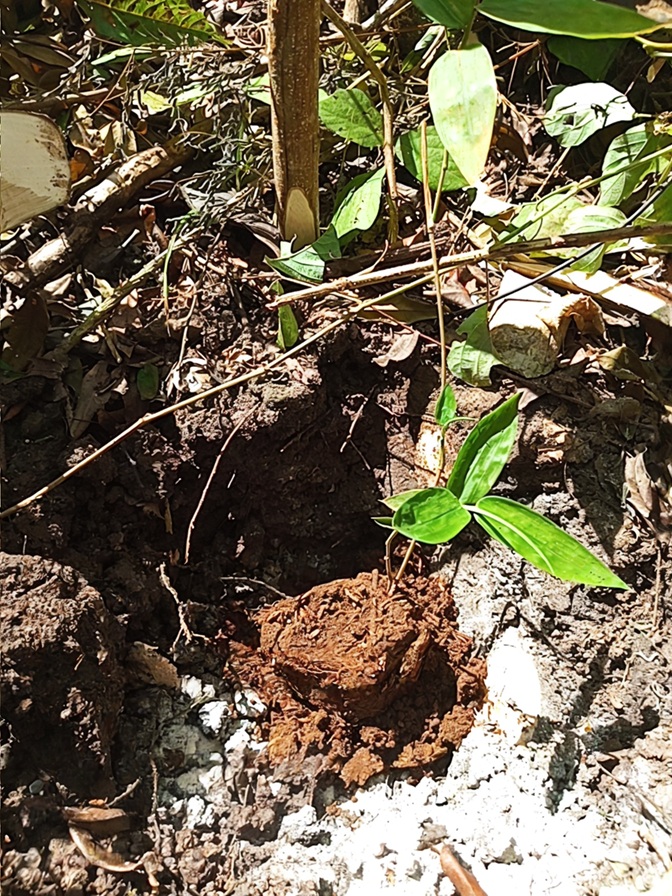

Efforts to rehabilitate water catchment areas to anticipate ecological crises are being aggressively carried out in the upstream region of East Java. The Temurejo Forest Farmers Group (KTH) has become a key player in a program to plant 1,800 petung bamboo seedlings to restore the ecological function in the upstream area of the Belik Karyo water spring, Temurejo Village, Bangorejo District, Banyuwangi Regency.
This strategic step was taken in response to the biophysical conditions of Temurejo Village, which is located in a lowland area with a high vulnerability to erosion. Massive land-use pressure in the area has triggered a decline in soil quality and degraded water infiltration capacity.
Through close collaboration among the Environmental Bamboo Foundation (Yayasan Bambu Lingkungan Lestari - YBLL), Jejakin, Tanoker, the Temurejo Village Government, and the local community, this program aims to restore vegetation cover, strengthen soil and water conservation, increase the village's ecological resilience, and simultaneously build a foundation for the community's economy based on productive agroforestry.
"We have planted 1,800 petung bamboo seedlings. Hopefully, in the future, this can restore the Belik Karyo water spring and become a conservation area," said Meyco Danu Pradana, Village Facilitator from YBLL.
Danu added that the intensive planting action took place over two weeks in May 2026, targeting a rehabilitation area of up to 100 hectares. All field movements were coordinated directly by I Wayan Misdianto as the Chairman of KTH Temurejo.
He mentioned that the success of this program was backed by a thorough preparation phase through participatory mapping with residents to determine priority planting areas, such as sloped lands, dry fields (tegalan), and the banks of the upstream water spring. The field team also conducted a comprehensive biophysical survey that included analyzing soil structure, slope, erosion potential, and water availability, before finally establishing planting micro-zones that combine bamboo species with other productive crops like durian, avocado, and dragon fruit.
"We selected bamboo seedlings that are at least 30 centimeters tall with healthy root conditions," Danu continued.
In addition to choosing high-quality seedlings, he noted that planting techniques such as digging planting holes with a depth of 20-30 centimeters, setting proper planting intervals, applying mulch, and installing stakes also played a crucial role.
Furthermore, to maximize the survival rate of the bamboo in Temurejo’s dry soil, they utilized planting media such as charred rice husks, manure, and dolomite.
Unlike conventional planting actions, this program integrates digital technology to ensure transparency and sustainability. Every planted seedling is immediately documented and precisely mapped using a geotagging system on the PIJAK application. This step serves as a baseline monitoring database to periodically evaluate the survival rate and growth of the plants.
"We want to review the planting results more accurately," Danu added.
Aside from generating digitally integrated data, the program has also successfully increased the community's capacity in planting, maintenance, and seedling monitoring techniques in accordance with strict technical standards.
"Through this collaboration, we hope to bring about a tangible restorative impact, preserve the upstream water spring, and sustainably boost the socio-economic resilience of the Temurejo community," Danu concluded (2/6/2026).